At this early stage in our journey together you, my special reader, may rightly be wondering: what is the reason that I write? Is there a compelling purpose why I should exchange my time for inked letters, and you for reading them? Why are authors driven to create romantic fictions, to delineate their soaring notions in (what they deem) immortal lines? This question have poets put to themselves, as Pope so masterfully did when addressing Arbuthnot:
Why did I write? what sin to me unknown
Dipp’d me in ink, my parents’, or my own?
As yet a child, nor yet a fool to fame,
I lisp’d in numbers, for the numbers came.
I left no calling for this idle trade,
No duty broke, no father disobey’d.
The Muse but serv’d to ease some friend, not wife,
To help me through this long disease, my life…
Epistle to Dr. Arbuthnot, by Alexander Pope
This is a mystery even to the inquirer. And yet it remains the duty of a writer behind every exertion to impart some especial value and not merely to cover paper. Upon the subject of authorship and style old Schopenhauer had strong opinions; it is against the standard of this martinet that we had best measure ourselves.
Writing for money and reservation of copyright are, at bottom, the ruin of literature. No one writes anything that is worth writing, unless he writes entirely for the sake of his subject…unless an author takes the material on which he writes out of his own head, that is to say, from his own observation, he is not worth reading.
On Authorship, by Arthur Schopenhauer
Granting Schopenhauer his due as regards originality, it is incumbent for many who endeavour by the pen to have the thoughts of other thinkers before them, so as to engage with some specific theme. As is being done here, we arrive at a clearer understanding of truth and necessary action by testing, refining and improving upon existing steams of thought. So it is with music where variations and improvisations are devised upon an established theme; the great masters did not shy from studying others and developing their own voices in this way. Where it concerns the ownership of work, by contributing a verse to the powerful play I reap a self-satisfaction often reward enough in itself. But I resist a deeper attachment to my published work, for once the words are shown to the world they wholly belong to it—and I glide on, converting life to letters in my wake.
The reasons that I write are twofold: a need to express myself to a broad audience, and because I have something to say which may merit its attention. What others gain from my words are conceived to be: first, ideas which serve to elevate their thoughts, as a midwife to the birth of new notions engendering value to life; second, an increased store of English phrases and an appreciation for the possibilities of language; third, to gather a community of readers, thinkers and fellow creative minds, supporting one another as we express our uniquely poetic selves. We are each the protagonist of a story, though shaped by circumstance and circumscribed by fate we possess enough agency to make it moving and memorable.
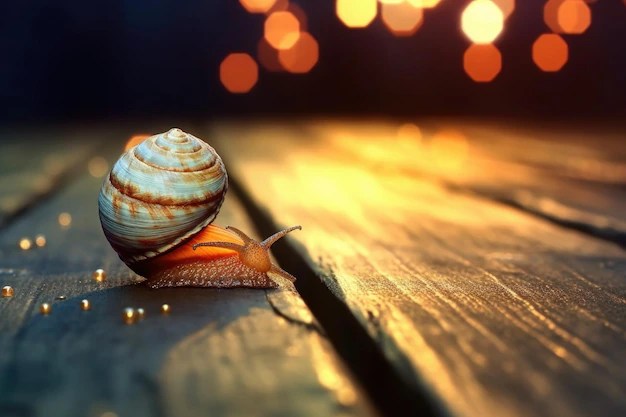
A broader reflection as I close this session of thought: what do I want out of this life? Like yeasty dough rising in the kiln, the answer soon emerges. To be free; to love and be loved; to be valued; to be responsible for beauty. I hope to promote these ideals to you, my special reader, so that we can live contented with ourselves and leave a glistening trail (like snails on a footpath after rain) to show where we have been.
 Caged Fancy